This September, every lesson, meeting, coaching conversation and guidance session uploaded to Starlight will be analysed by our most capable AI yet. It is our fourth major model upgrade in twelve months — and part of a commitment to ensure Starlight keeps getting better for every teacher and school that uses it.
There is a strange thing about buying software in the age of AI.
Traditionally, you bought a product and waited for the company to add features. The software improved when somebody built something new.
That is still happening at Starlight — rapidly. In fact, we have two significant new features arriving for the start of September. Watch this space.
But something else is happening underneath the surface.
The intelligence itself is improving.
And today, we have upgraded it again.
Our fourth major AI upgrade in twelve months
Starlight does not build its coaching reports from a fixed set of rules.
It takes a transcript — often tens of thousands of words capturing the complexity of a real lesson, meeting or professional conversation — and reasons across it.
It identifies patterns. Connects evidence from different points in the conversation. Distinguishes between what was said and what can reasonably be inferred from it. Finds moments that matter. Evaluates them against pedagogical and professional frameworks. And turns that analysis into useful, structured insight.
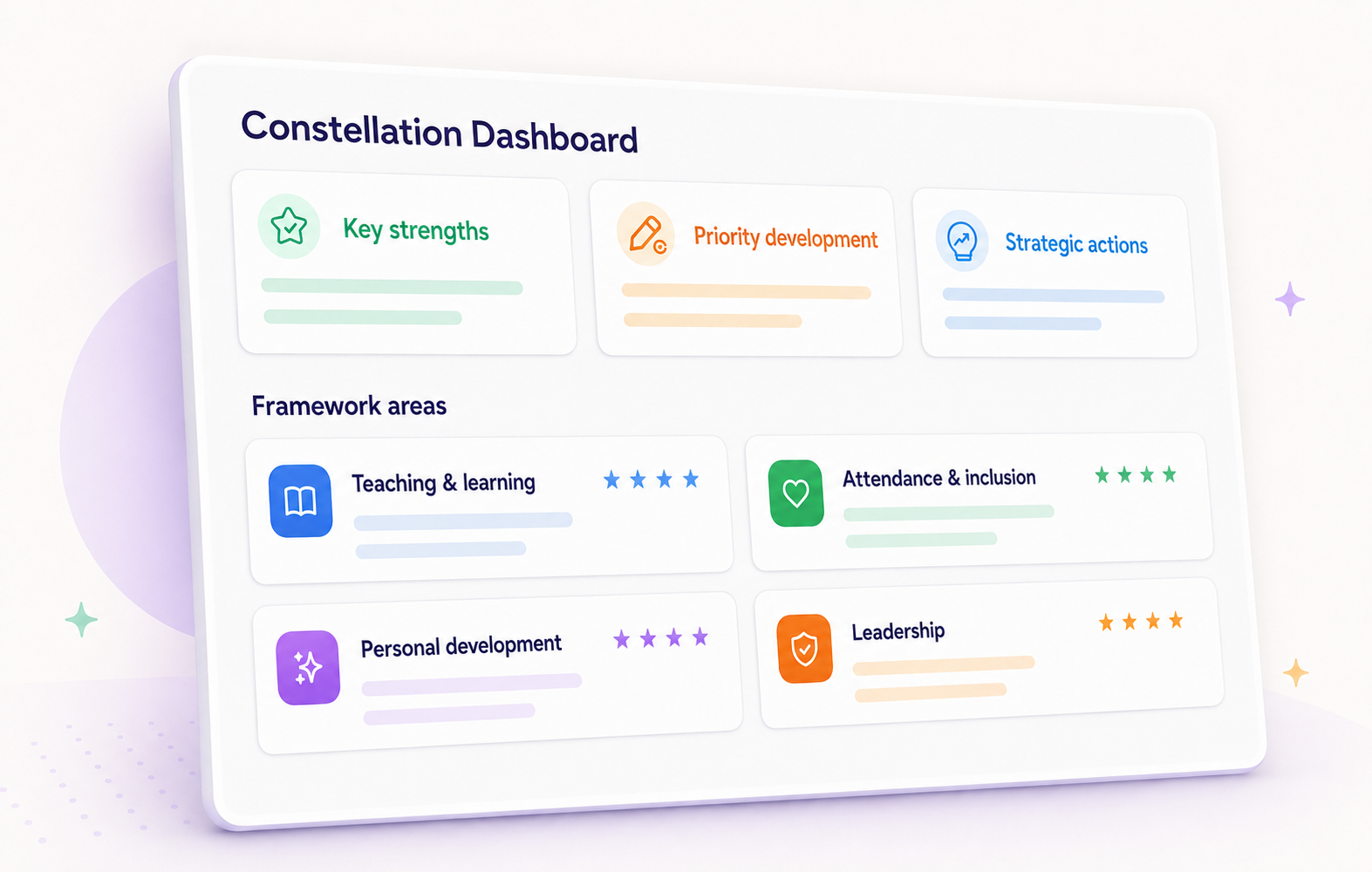
The same principle sits behind Constellation, where individual data is anonymised and aggregated to help leaders understand patterns across a school without turning professional development into surveillance.
The quality of the intelligence underneath Starlight therefore matters enormously.
So we continually test leading frontier AI models against the kinds of work Starlight actually needs them to do. When a materially better model becomes available — and when it passes our own testing — we upgrade.
This is the fourth time we have done that in the last twelve months.
We do not intend it to be the last.
Why this generation of AI matters
Public benchmark results for the new generation of frontier models show particularly significant progress in capabilities that matter for Starlight: reasoning across very long documents, retrieving relevant evidence from large amounts of information, maintaining context, and completing complex analytical tasks.
On one demanding long-context evaluation, the model now underlying Starlight achieved 91.5% accuracy when locating and reasoning over multiple pieces of information distributed across 256,000–512,000 tokens of context.
On another long-context reasoning test at 256,000 tokens, it achieved 90.7%, substantially ahead of the previous generation's 73.7%.
Those are technical benchmarks, not measures of teaching quality, and they should not be confused with one. But the capabilities they test are highly relevant to what Starlight asks an AI system to do.
A lesson transcript is not a short prompt.
The evidence for a useful coaching insight might begin with a question in minute seven, reappear when a pupil responds in minute nineteen, and become significant only when the teacher revisits the idea forty minutes later.
Understanding that requires more than summarisation.
It requires context.
It requires reasoning.
And increasingly, it requires something that begins to resemble synthetic cognition: the ability to hold a complex body of information together, identify relationships within it and turn those relationships into useful insight.
That underlying capability is advancing extraordinarily quickly.
Starlight users benefit when it does.
More intelligence. More context. Deeper pedagogical reasoning.
There is another reason this upgrade matters for teachers.
The new intelligence underlying Starlight can work with a context window of more than one million tokens — enough capacity to reason across an extraordinary volume of information at once.
But capacity alone isn't the point.
What matters is what Starlight asks that intelligence to do.
When Starlight analyses a lesson, it is not simply summarising a transcript or counting how many questions a teacher asked. It brings powerful general reasoning capability together with the pedagogical frameworks we have built into Starlight — directing that intelligence towards the things that matter in teaching and learning.
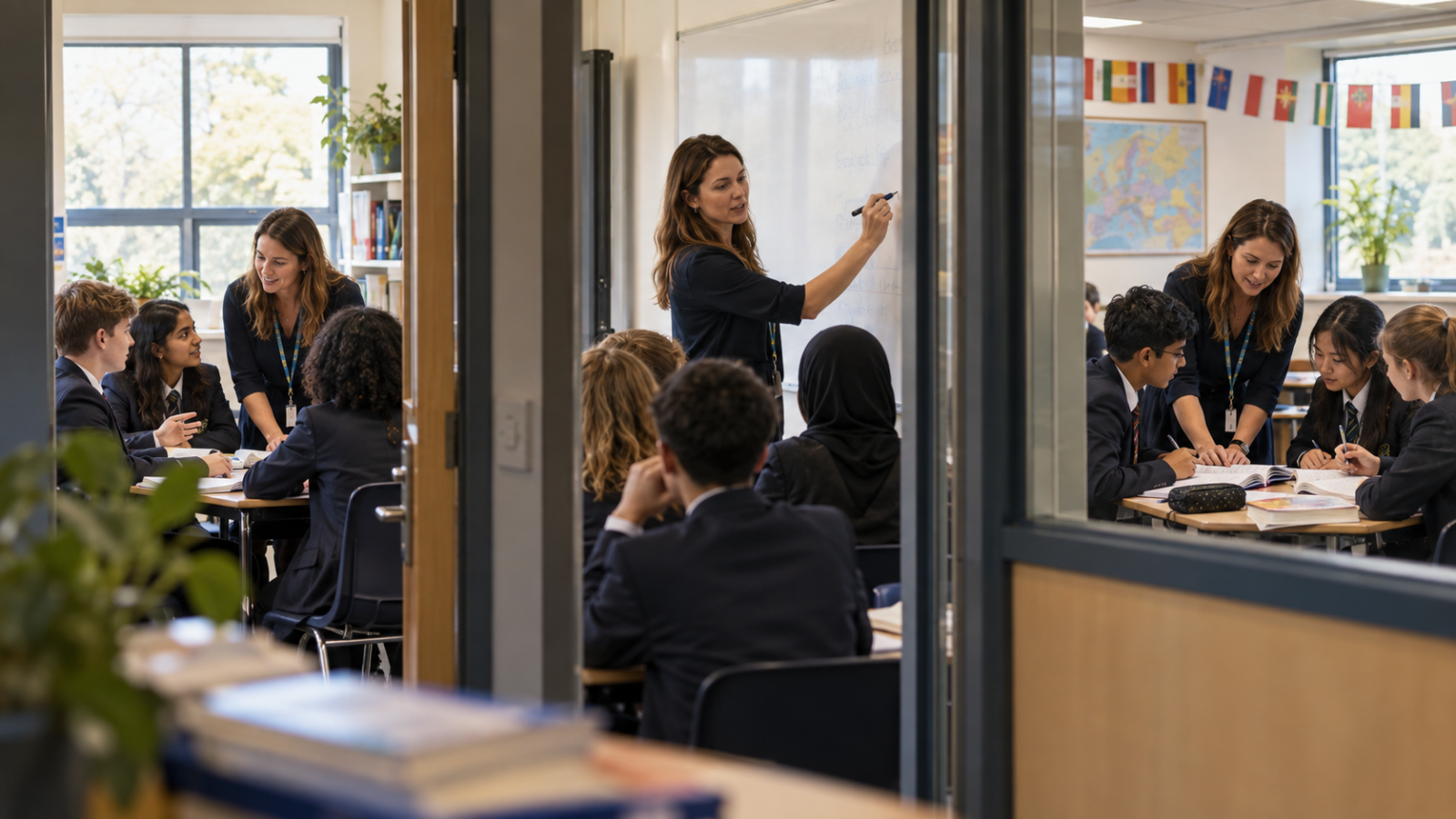
That means examining what happened across an entire lesson in context: learning intentions and lesson impact, behaviour management, adaptive teaching, questioning, metacognition, literacy and vocabulary, cross-curricular connections, sentiment and tone, and opportunities for further professional reading and exploration.
And it can connect those observations to a much wider body of knowledge about teaching, learning and professional practice.
That distinction matters.
A transcript tells us what was said.
Starlight's pedagogical framework tells the AI what to pay attention to.
And increasingly capable frontier intelligence helps it reason about what it means.
The result isn't simply more AI. It is a more capable analytical engine applied deliberately to the complex professional practice of teaching.
What should you notice?
We would rather let teachers judge the difference than make grand claims about it.
But when you make your first upload of the new academic year, you should notice greater depth and precision in the way Starlight understands what happened.
That might be a:
- classroom lesson
- coaching conversation
- staff or leadership meeting
- CPD or training session
- assembly
- careers guidance conversation
- cover lesson
- or another professional conversation worth learning from.
Starlight has its roots in teacher coaching, but the underlying idea has always been bigger:
important professional conversations contain valuable information that usually disappears when the conversation ends.
A transcript makes that information visible.
Starlight turns it into insight.
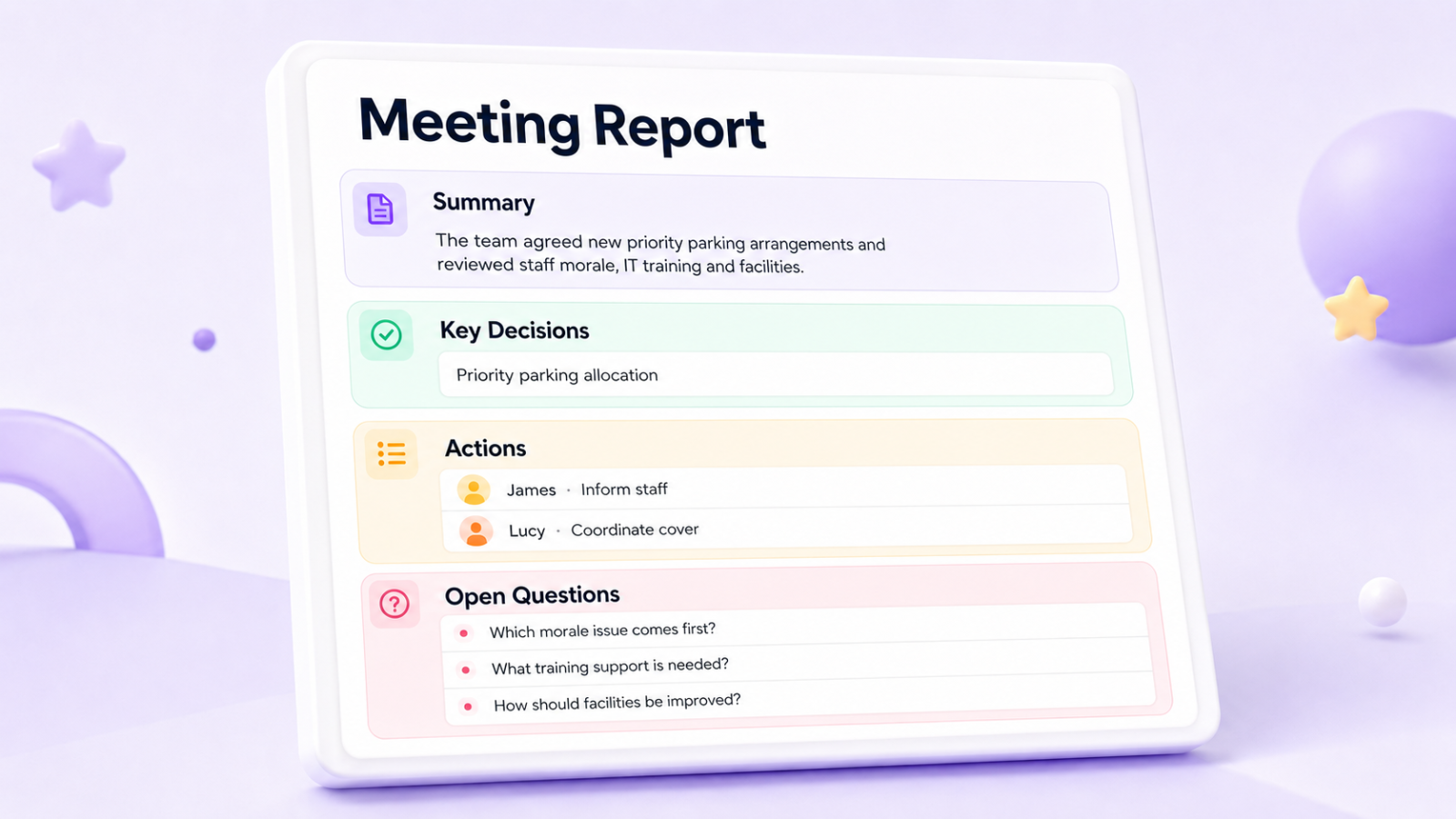
Our recently launched Careers Report is one example. A careers adviser can record a guidance conversation and Starlight can transform the transcript into a structured report, reducing the administrative work that follows while preserving the detail and value of the conversation.
It is the same underlying intelligence, applied to a different professional context.
A product that compounds
This is perhaps the most important point about today's announcement.
When a school subscribes to Starlight, it is not buying a frozen version of the platform.
It is buying into something that compounds.
We add features.
We improve the experience.
We learn from teachers.
We refine our coaching frameworks.
We improve our prompts and evaluation systems.
And there are now two things compounding underneath Starlight.
The first is ours: the pedagogical frameworks, prompts, evaluation systems and product capabilities we continue to develop.
The second is happening at the frontier of AI itself: models are becoming more capable at reasoning, understanding context and working across complex bodies of information.
Starlight brings those two curves together.
As the underlying intelligence improves, we test it. When it demonstrates that it can produce meaningfully better analysis for teachers and schools, we upgrade.
Four major model upgrades in twelve months is evidence of that commitment.
The result is unusual.
The Starlight you use next year should be substantially more capable than the Starlight you buy today — without your school having to buy a new product.
And the rate at which frontier AI capability is developing suggests there is much more to come.
Better AI. Same principles.
Increasing capability makes our principles more important, not less.
Starlight remains built around a simple idea:
Coaching, not compliance.
Growth, not grading.
Insight, not surveillance.
Teachers' individual reports remain private. Constellation gives leaders anonymised, aggregated insight rather than access to individual coaching reports.
And the data used to generate Starlight's analysis is not used to train the AI models.
Our AI processing is configured with zero data retention, meaning the model does not retain the content sent for analysis.
Within Starlight itself, users remain in control of what they have created. Delete an uploaded recording and the associated audio, transcript, feedback report and related analysis are permanently removed with it.
That matters.
The more capable AI becomes, the more deliberate we need to be about the conditions under which it is used.
For us, better intelligence and stronger safeguards belong together.
And we are thinking about the environmental cost too
AI has a physical footprint.
Every transcript analysed and every report generated ultimately requires computing infrastructure and electricity. As AI becomes more capable and more widely used, we think technology companies have a responsibility to take that seriously.
Starlight's core server infrastructure is hosted in European data centres powered by 100% renewable electricity, with our infrastructure provider using hydropower in Germany and renewable hydropower and wind power in Finland.
Its data centres are also engineered for unusually high energy efficiency, including extensive use of outside-air cooling.
That does not make AI environmentally cost-free. It isn't.
But it does mean that environmental responsibility is part of the infrastructure decisions we make as Starlight grows.
The intelligence underneath the product matters
There will always be new buttons to add.
New dashboards. New reports. New integrations. New ways to make Starlight faster and easier to use.
And, as we said, two particularly significant additions are coming at the start of September.
But increasingly, one of the most important parts of an AI product is something users never see:
the quality of the intelligence underneath it.
That is why we test continuously.
It is why we have changed our underlying model four times in twelve months.
And it is why our commitment is straightforward:
when better intelligence can produce better insight for teachers and schools, we will pursue it.
So when you upload your first lesson, meeting, coaching conversation, assembly or careers guidance discussion this September, Starlight will look familiar.
But underneath the surface, it will be considerably smarter.
And we are only getting started.
Spark Insight with Starlight.
The Insight Engine is written by Adam Sturdee, co-founder of Starlight, the UK’s teacher-first AI-powered coaching platform, and a senior leader with responsibility for teaching, learning and coaching. This blog is part of a wider mission to support educators through meaningful reflection, not performance metrics. It documents the journey of building Starlight from the ground up, and explores how AI, when shaped with care, can reduce workload, surface insight, and help teachers think more deeply about their practice. Rooted in the belief that growth should be private, professional, and purposeful, The Insight Engine offers ideas and stories that put insight, not judgment, at the centre of development.