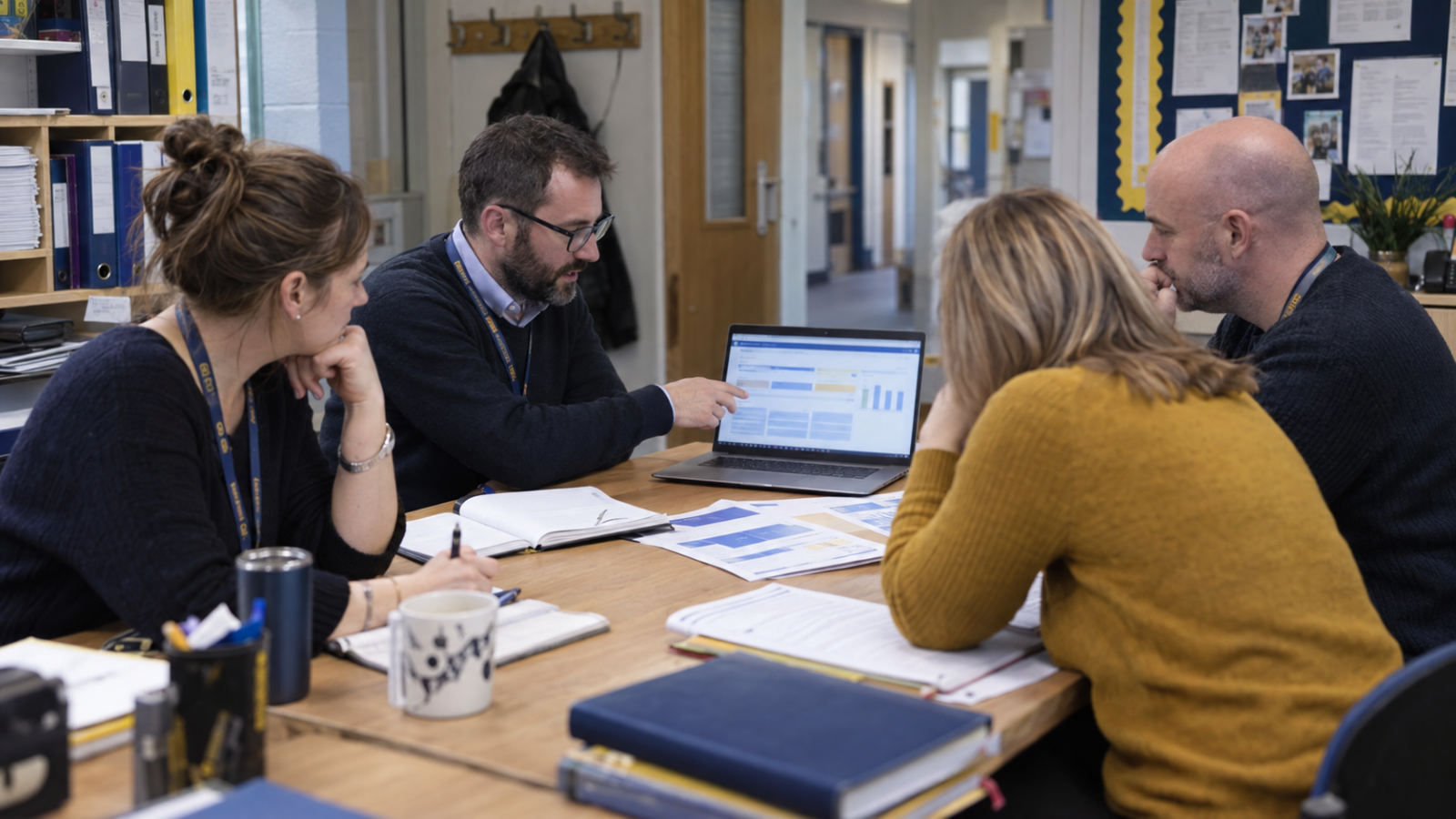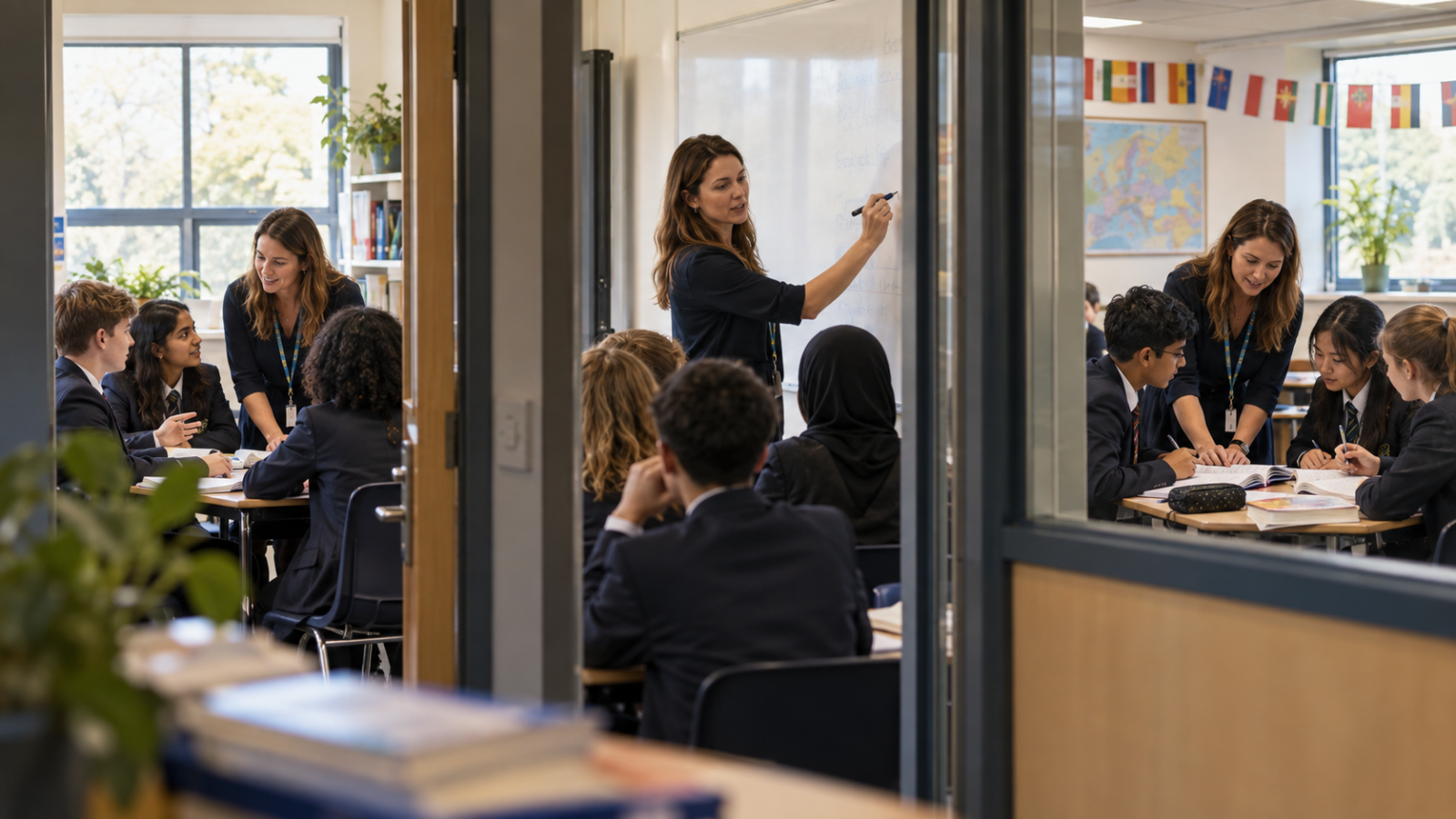
A class is more than a name on a timetable. It has its own history, routines, strengths and pressure points, whether it is a confident group that thrives on challenge, a mixed-attainment class still developing its independence, or a cohort containing several pupils learning in an additional language.
The teacher may be the same, the subject may be the same and even the lesson plan may be similar, but the teaching context is not. That is why we have introduced Classes in Starlight: a new way to connect lesson recordings to the groups they were actually taught to, so that feedback can become more relevant, more continuous and more useful over time.
Write the context once
Teachers can now create the classes they teach from the Classes area in Starlight. For each class, you can add a class name, year group and subject, together with optional background about the group, such as whether it is mixed-attainment, contains several EAL pupils, has recently experienced a change of teacher or is working through a particular challenge.
This is the kind of information a human coach would naturally want to know before discussing a lesson, and Starlight can now carry that context into every recording connected to the class. You write it once, and Starlight remembers it for the lessons that follow.
As well as reducing repetition for teachers, this gives the feedback a much more accurate frame. A short pause, a change in pace or a particular questioning strategy can be understood in relation to the group in front of you, rather than as an example of teaching in the abstract.
Select your class when you upload
The class selector now sits directly inside the audio-upload process. When uploading a lesson, teachers can choose the relevant class or allow Starlight to work it out automatically, and if classes have not yet been created for the current academic year, the upload screen provides a direct route to manage them.
For many lessons, automatic matching will be enough, but manual selection becomes especially valuable when a teacher has more than one class in the same year group and subject. Two Year 8 science classes may share a curriculum, but they do not share a classroom history, so selecting the class tells Starlight exactly where that recording belongs. Where the context could be ambiguous, a deliberate teacher choice is more trustworthy than a confident guess.
The chosen class then appears on the lesson record alongside its year group, subject and topic. It becomes part of the lesson's context rather than an invisible filing detail, making it clear which sequence of learning and feedback the recording belongs to.
Feedback that develops with the class
The real value appears over time, because although a single lesson can tell us something useful, a sequence of lessons with the same class can tell us much more. When recordings are connected to a class, Starlight can build a clearer memory of that cohort's teaching journey: what has already been covered, what the group has found difficult, how learning is being sequenced and how classroom patterns are changing.
Future feedback can therefore be grounded in the lessons that genuinely belong together. A suggestion made after the first recording does not have to disappear into the archive, because later lessons can provide evidence of how the teacher and class are developing; patterns become easier to recognise, small changes become visible and feedback gains continuity.
Starlight still learns from a teacher's practice across all their lessons, with questioning, modelling, explanations and routines remaining part of the wider professional picture. What Classes adds is a separate layer of memory for each cohort, so Starlight learns the teacher across their teaching while remembering each class in its own context.
Keeping one cohort out of another's story
Without class-level context, unrelated lessons can easily be placed side by side. A calm, highly independent examination group might be compared with a younger class that needs more modelling and tighter routines, while a lesson early in a new unit might sit alongside the final stages of an established sequence. The resulting data may be technically accurate while still missing something important.
Classes keeps those teaching journeys distinct, so feedback for one group is not shaped by the history of another simply because the year group or subject looks similar. This matters because useful coaching depends on fair comparisons and on understanding why particular teaching choices were made.
The question is not simply, "Was there more teacher talk?" or "Were more questions asked?" The more useful questions are what this class needed at this point in its learning, what has changed since the previous lesson and what might help this particular group next.
An academic year that fits your school
Classes also need a clear beginning and end. In the UK it is easy to assume that an academic year begins in September, but Starlight now supports hundreds of educators across an increasingly international community, and that assumption does not travel. Academic calendars vary between countries, regions and organisations, with some schools beginning their year earlier or later and others working to entirely different calendar patterns.
Rather than imposing one universal definition of an academic year, Starlight allows an organisation administrator or Starlight Lead to set the organisation's own start and end dates. Starlight then uses that period to group and archive classes correctly.
When a new academic year begins, teachers can start with the cohorts now in front of them while previous classes remain organised within their proper year. This prevents last year's class from becoming mixed into the memory of a new group, even when the timetable uses the same class name, year group or subject. It also means the feature works as naturally for an international school as it does for a school in the UK: the school calendar shapes Starlight, rather than Starlight forcing the school into a fixed calendar.
Simple for teachers, powerful underneath
From a teacher's perspective, Classes is deliberately straightforward:
- Create the class and add any useful background.
- Select it when uploading a lesson, or let Starlight match it automatically.
- Continue recording and reflecting as normal.
Behind those few steps, Starlight can build a more coherent record of teaching and learning across the year. The aim is not to give teachers another system to maintain, but to make the feedback they already receive better informed.
Personalisation is not achieved by simply producing more words. It comes from remembering the right things, separating the contexts that should remain separate and recognising how practice develops over time. A lesson belongs to a teacher, but it also belongs to a class, a moment in the curriculum and a particular stage in a shared journey; Starlight can now remember that.
Spark Insight with Starlight — and give every class feedback that grows with them.
🎥 Subscribe to our channel here: https://www.youtube.com/@Star21-ai
🌐 Read more on our blog: starlightmentor.com/blog
💡 Explore the platform: www.starlightmentor.com
🐦 Follow us on X: @star21starlight
The Insight Engine is written by Adam Sturdee, co-founder of Starlight, the UK's first AI-powered coaching platform, and a senior leader with responsibility for teaching, learning and coaching. This blog is part of a wider mission to support educators through meaningful reflection, not performance metrics. It documents the journey of building Starlight from the ground up, and explores how AI, when shaped with care, can reduce workload, surface insight, and help teachers think more deeply about their practice. Rooted in the belief that growth should be private, professional, and purposeful, The Insight Engine offers ideas and stories that put insight, not judgment, at the centre of development.